
|
|||||||||||||||||||||||||||||||||||||||||||||||||||||||||||||||||
Pelagic Trip to the Cordell Bank National Marine Sanctiary I have added a gallery from a recent pelagic trip we made to the Cordell Bank National Marine Sanctuary: My Blog also contains an entry on pelagic trips to the Cordell Bank and on pelagic bird photography: Pelagic Birding Trips to the Cordell Bank |
|||||||||||||||||||||||||||||||||||||||||||||||||||||||||||||||||


Launching the Heinpoto Blog... I have launched a blog to supplement this web site. The blog will contain additional photos and other content that may not fit with the natural history image galleries on this site. The blog is much easier to update, so it will likely contain more current content (and I will make sure to announce any new additions to the main web site on the blog). I will continue to use the Heinphoto web site for my nature, wildlife, and landscape image galleries. |
June 2008 - Maine, New Hampshire, and Vermont |
|||
| In early June we headed east on a quest to experience the beauty of the forests, coasts, and mountains of the Northeast in Spring, while at the same time accomplishing one of Claudia's life goals. We spent ten days on a Wings Birding Tours trip to Maine, New Hampshire, and Vermont. Follow any of the links below to visit the trip gallery to see how we did: | |||
Trip Gallery
|


December 2007 - Images of Trinidad and Tobago |
|
| We spent the 2007 holidays acquainting ourselves with the amazing wildlife, beautiful landscapes, and friendly people of Trinidad and Tobago. The links below will lead you to galleries from each of these unique Caribbean islands. | |
| Images of Trinidad | Images of Tobago |
Diablo Magazine Threads of Hope Award I received one of Diablo Magazine's 2007 Threads of Hope Awards in December. The award is for my volunteer contributions (many of which are photo related) to Save Mount Diablo, a local land trust and conservation organization. The award is a great honor for both me and for SMD. If you are interested, you can read about all five of this year's winners on the Diablo Magazine web site. |
|


The Subantarctic Islands of New Zealand and Australia |
||
| During December of 2005, we
spent 18 days aboard the "Spirit of Enderby", a small Russian polar
research ship, on a Wings Birding
Tours and Heritage Expeditions trip led by Steve Howell and other outstanding
naturalists. The purpose of the trip was to study and photograph seabirds
and marine mammals on and around several unique and beautiful subantarctic
islands located on the Southern Ocean near New Zealand and Australia.
We visited Snares, Enderby, Auckland, Macquarie (Australia), Antipodes, Bounty, Campbell, and Chatham Islands on a 2382 nautical mile loop that started and ended in the city of Dunedin on the South Island of New Zealand. Click on any of the images below to view galleries of photos from each of these unique and beautiful islands: |
||
%20Albatross-thumb.jpg) Chatham (Shy) Albatross The Chatham Islands |
 Yellow-eyed Penguin Enderby Island |
 White-headed Petrels The Southern Ocean |
The Many Faces of Mount Diablo Photo Exhibit December 2005 Update: The exhibit at the Pacific Bay Coffee Company has finished. However most of the images in the exhibit have been moved to Save Mount Diablo's new offices, where you are welcome to visit and view them: Save Mount
Diablo |
|
| During the month of November I will be exhibiting some of my photographs at the Pacific Bay Coffee Company in Walnut Creek. Most of the photographs will be from around Mount Diablo, however I may slip in a few photos from some of my other favorite places. Many of the photos will be available for purchase. There will also be a "Greet the Artist" event on Sunday, November 13th from 2-4 pm. Details Below: | |
Here is a link to an article
on me and the exhibit in in the Walnut Creek Journal - the story also
appeared in the Concord Transcript, and the Contra Costa Sun: The Many Faces of Mount Diablo Exhibit Location: Pacific Bay Coffee Company Exhibit Date: November 2 - 31 Greet the Artist Event: Sun. Nov. 13, 2-4 pm With live blues & ragtime music from The Real Placebos |
|

Spring and Summer 2005 Update |
|
| It has been a busy Spring and Summer with much work on and around Mount Diablo. It was one of the best Springs in recent memory for wildflowers, culminating in the rediscovery of the Mount Diablo Buckwheat (see below). We were also able to sneak away for trips to the Mojave desert in late Spring, and to the Sierra (Alpine County) in early Summer. Check out the updated recent work page for a summary of images from this Spring and Summer | |
Saving Mount Diablo |
||
 Hikers above Donner Canyon |
 Bumblebee Moth |
 Diablo Sunflower |
The August 2005 issue of Diablo Magazine contains an 8-page story by Hannah Craddick entitled Saving Mount Diablo. The story highlights some of the key places on and around Mount Diablo that have been preserved over the past 30+ years through the efforts of Save Mount Diablo. The printed piece also includes a large number of my photographs. |
||
The Mount Diablo Buckwheat Rediscovered! |
||
 |
 |
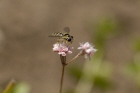 |
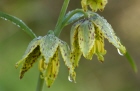
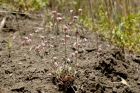
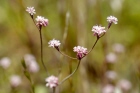
On May 20th 2005, I was asked by Seth
Adams, Save Mount Diablo's Director of Land Programs, to join a small group
of biologists and reporters to photograph a plant that hadn't been seen for
69 years: Eriogonum truncatum, the Mount Diablo Buckwheat. However, on May 10th, 2005, a small population of about 20 plants was rediscovered by University of California botanist Michael Park during a routine plant survey in a remote section of Mount Diablo State Park. The location of the discovery is being kept secret until a long-term management/recovery plan can be developed. However, the location is on land that was preserved by Save Mount Diablo. I was told that the hike to the location of the discovery would be long, hot, steep, and rugged. As a result, I left my tripod and other equipment in the car, and took only my camera and two lenses - my favorite macro lens to photograph the plant, and a wide-angle zoom lens to photograph the habitat and the people. Consequently, all of my images were taken hand held with available light. After publication of the initial exclusive story by Contra Costa Times reporter Mike Taugher (with photos by Times photographer, Cindi Christie), the news spread rapidly. When the Associated Press picked up the story (and my photographs), the news went worldwide. More information abut the discovery, and links to a few of the news outlets that used my photographs can be found below. Save Mount Diablo Press Release: Mt. Diablo Buckwheat rediscovered San Francisco Chronicle: Flower species thought extinct found blooming on Mt. Diablo Grad student spots type of buckwheat last seen in 1936 National Public Radio: Wildflower Thought Extinct Rediscovered in Calif. |
||
8 May 2005
| I have added a trip gallery for Save
Mount Diablo's 2005 Four
Days Diablo Hiking Trip.
A San Francisco Chronicle article on this trip written by reporter Carl Nolte, included one of my images: Scratching the surface of Diablo/Four-day hike on 'island of wilderness in a metropolis' |

30 January 2005
After receiving many requests, I have opened a web store to allow the on-line purchase of photo gift cards, limited-edition calendars, and fine art prints - check it out.
26 September 2004
| Catching up on a summer's worth of shooting with trips to Alaska in June and Yuba Pass in California's Sierra Nevada Mountains in July. The "Recent Work" page includes some nice images of sleek Northern Rightwhale Dolphins and Pacific White-sided Dolphins from a pelagic trip to the Cordell Bank National Marine Sanctuary. |  California Red-sided Garter Snake |
9 May 2004
| Save Mount Diablo's Four Days Diablo hiking/backpacking trip starts in Walnut Creek and ends four days and almost 40 miles later near Brentwood. In between, the Diablo Trail passes through six parks, while only crossing two public roads. The Diablo Trail is a testament to the hard work done over last 30+ years to expand and protect the open space and habitat around Mount Diablo. |  Sunset on the Daiblo Trail |
24 April 2004
|
Spring is a great time to visit the desert, so we headed south for Death Valley. A thunderstorm chased us from the Panamint Mountains all the way into Furnace Creek. We spent the next 3 days exploring Death Valley and the surrounding desert hoping to find migrant birds, spring wildflowers, and any reptiles or amphibians who might choose to reveal themselves to us. Little did we know that the Desert Pupfish would become the star of our trip. From Salt Creek in Death Valley to Saratoga Springs and Ash Meadows National Wildlife Refuge, we "discovered" the pupfish and the unique desert springs they inhabit. |

22 February 2004
| Audubon Canyon Ranch is a wildlife sanctuary located on the Shore of Bolinas Lagoon in Marin County, California. Each Spring hundreds of pairs of Great Blue Herons and Great and Snowy Egrets return to the large rookery in Picher Canyon to nest in the tops of Coast Redwood trees. However, in mid-February things are still quiet in the rookery, and you can take time to appreciate some of the other inhabitants of this beautiful canyon. The winter rainy season is the time to search for salamanders and on this particular day we were rewarded with Rough-skinned and California Newts, California Slender Salamanders (both red and gray morphs), Ensatinas, and the magnificent California Giant Salamander - in this case the aquatic larval form. Images of these amphibians can be viewed on the "Recent Work" page along with some early Star Lilies (Zigadenes) and beautiful little Red Hygrophorus Mushrooms, which were poking their caps up through the redwood litter on the floor of Picher Canyon. |

21 September 2003
It has been a long time since the last general update of this
site. During that time, I have developed a custom script for my image
management database that will allow me to generate new gallery pages much
more easily. Along with that capability, I have changed the look and
feel of the gallery pages. |
10 January 2003Public Slide Show: We will be presenting a program on our trip to Antarctica at the Mt. Diablo Audubon Society meeting on Thursday, February 6th in Walnut Creek California. Our presentation begins at 8:05 PM. Click the following links for directions and the program description. |
 Chinstrap Penguin on Nest |
26 December 2002
 King Penguins on South Georgia Island |
During November and December, we spent 19 days aboard the Russian vessel, Grigoriy Mikheev, on a Wings/Oceanwide Expeditions trip exploring the Southern Oceans and Antarctic Peninsula. I have created a preliminary set of galleries to share some of the images from this amazing trip. Please stay tuned, since I am planning to add more detail to the galleries, and more information about the trip in the coming weeks. |
13 October 2002
| The first two weeks of October are magical in the Eastern Sierra. Aspens that grow along the creeks and canyons draining the Eastern slope of the Sierra Nevada glow with the yellow, orange, and red colors of fall. I have added a trip gallery of landscape images taken from Lee Vining Canyon, Lundy Canyon, Conway Summit, and the June Lake Loop in the Mono Basin, as well as the South Fork of Bishop Creek in Bishop Canyon. |

25 August 2002
Even though it still feels like summer, we know that fall has arrived with the south-bound shorebird migration. Monterey Bay is a great spot to witness this migration. From the mouth of the Carmel River and the Pacific Grove coastline, to Elkhorn Slough and the Moonglow Dairy near Moss Landing, you can usually find some excellent shorebird habitat. I managed to capture a few good shorebird images during a recent visit with friends to Monterey County. |

When we visit Monterey, we usually check out the open grasslands just north of the town of Marina. During the late fall and winter this area is great for raptors. Although we we were a bit early for winter raptors to be expected, we decided to check this place out anyway. To our great surprise, we discovered a Crested Caracara perched on a fence post. In the United States, Crested Caracaras are typically only found in Florida and along the Texas/Arizona border with Mexico. There has never been an accepted record for California. |

When you find an out-of range raptor like this one, a question that usually arises is whether the bird is wild, or has escaped from a falconer or other private collection. Unfortunately, unless there are obvious physical signs, it is usually difficult or impossible to determine the origin definitively. This bird didn't show any obvious signs of captivity, so we just enjoyed (and photographed) it. My only other encounter with this species was through the heat waves of August and a cyclone fence at the Sells dump in South-central Arizona. Needless to say, this was a much more pleasant experience! |

We visited Mono Lake and the Eastern Sierra over the Fourth of July (including a pass through Yosemite National Park and a trip to the White Mountains) . This has to be one of the most "photogenic" trips that one can make in California. It also encompasses a wide range of habitats: from high alpine at Tioga Pass and the White Mountains to the Great Basin desert in between, so there are many excellent opportunities for "naturizing". I created a special gallery in order to deal with the large number of the images from this trip. |

Finally, I have added a number of "miscellaneous" images from other trips and events that have happened this summer. Highlights include an image of a Black Skimmer from the Martinez Regional Shoreline (an unusual sighting for this part of California), and a great sunset image from Mt. Diablo State park taken on the hottest day of the year (so far). My personal favorite though is my first-ever encounter with a Bumblebee Moth, which is a bee mimic that is related to sphinx/hummingbird moths. |

30 June 2002
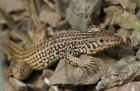
- Just when I thought summer had arrived for good in our part of Northern California, I stumbled on some remnants of Spring. All it took was some elevation - a couple of hikes near the summit of Mt. Diablo (3849 ft) produced some nice wildflower, butterfly, and lizard images. The California Whiptail image is notable for me personally as it is the first time I have seen this species on the mountain.
- A quick weekend trip to South Florida for a wedding provided enough time to visit the Wakodahatchee Wetlands in Palm Beach County. This is an amazing place with an outrageous assortment of wildlife including cooperative Least Bitterns, Green and Tricolored Herons, Purple Gallinules, American Alligators, Florida Redbelly Turtles, Least Terns, nesting Purple Martins, etc, etc. The wetland is managed by the Palm Beach County Water Utilities Department, which should be commended for the effort and expense it has invested into this extraordinary wildlife area.
- I have created an event gallery for the Spring 2002 Save Mount Diablo 4-Day Diablo Trail backpacking trip.
20 June 2002
- I have moved Heinphoto.com to it's own web server, and have made a number of enhancements to the web site including adding a Search Page.
- I have created a new set of galleries to share preliminary photos from an event or trip. The images are unedited, and most of them will never appear in the Natural History Gallery. However, I needed a place to be able to share photos from a trip with friends and clients quickly.
12 May 2002
-
Updated the Mount Diablo and Southeast Arizona special places galleries, and added a new Mojave Desert gallery.
6 May 2002
-
This has been a great Spring in Northern California, with excellent wildflower displays and the green, green hills. In addition to visiting favorite locations like Morgan Territory Regional Preserve, I was fortunate to be able to hike along on one day of Save Mount Diablo's 4-Day Diablo Trail Backpacking trip. The Diablo Trail starts in Walnut Creek and ends 30 miles later at the Round Valley Regional Preserve staging area. In between it passes through 6 different parks and open space, while crossing only two roads. The Diablo Trail highlights 30 years of land preservation efforts by Save Mount Diablo.
-
Spring is the time of the year to visit the desert. In April we managed to take trips to both Southeast Arizona and California's Mojave Desert. One of the highlights of our trip to Arizona was encountering large numbers of Ramsey Canyon Leopard Frogs, in several ponds at Beatty's Miller Canyon Guest Ranch in the Huachuca Mountains. These frogs were only "discovered" in the late 1980s, and are considered to be the rarest North American frog species. The Beatty's have done an amazing job of providing habitat for these threatened amphibians. The Beatty's Orchard/Ranch is also arguably the best place in the US to watch hummingbirds.
-
The Mojave Desert is probably quite an obstacle for migrating songbirds to cross on their spring migration. Water is scarce, and oases like Butterbredt Spring and Galileo Hill stick out like sore/green thumbs. As dawn breaks at Butterbredt, western migrants like the Wilson's Warbler descend in large numbers to take advantage of the water, cover, and food that the oasis provides. Not far to the East, the lawn at the Silver Saddle Ranch and Galileo Hill is often covered with multicolored songbirds like Western Tanagers, Hooded Orioles, Wilson's and Yellow Warblers, and Lazuli Buntings. Desert wetlands like the Piute Ponds on Edwards Air Force Base, provide critical habitat for both nesting and migrating shorebirds and waterfowl.
13 March 2002
- Springtime in the East Bay Hills of Contra Costa County, California can be quite spectacular. I have added a few new images of local open space landscapes, including one image that shows the boundary of the Higgins property with Black Diamond Mines Regional Preserve. This remote and wild corner of the park will have houses backing up to the fence line shown in this image if the city of Antioch follows through on development plans for Future Urban Area #1. Please support Save Mount Diablo in their efforts to preserve open space in rapidly growing Contra Costa County.
- I have also caught up on a few older images of an unusual Orca, a young Raccoon, and one of the treats of a fall hike on Mt. Diablo - the Tarantula!
3 February 2002
- I have added images of one uncommon and several common winter birds on the Northern California coast to the Gallery.
- We will be presenting a program on our trip to the Galapagos Islands at the February 7th Mt. Diablo Audubon Society Meeting in Walnut Creek, California.
8 December 2001
- Several images in this update are from a Thanksgiving trip to Morro Bay and the Carizzo Plain National Monument.
- My image of Snow on North Peak was chosen by Save Mount Diablo for the cover of the invitation to their 30th Anniversary celebration that will be held on December 10th. Congratulations to Save Mount Diablo for 30 years of protecting habitat and open space in the San Francisco Bay Area.
3 September 2001
- Save Mount Diablo and the East Bay Regional Park District have recently announced several new land acquisitions in the eastern part of Contra Costa County. We provided Save Mount Diablo with photographs from the Gim/Clyma and Elworthy-Highland Ridge properties, which will be added to Morgan Territory Regional Preserve, and the Brown property, which will be land-banked as part of Black Diamond Mines Regional Preserve.
- On April 28th 2001, Save Mount Diablo and the East Bay Regional Park District celebrated the acquisition of Clayton Ranch. This spectacular property has outstanding views of Mount Diablo's North Peak and will be land-banked as part of Black Diamond Mines Regional Preserve.
- The endangered California Red-legged Frog (Rana aurora draytonii) is one of the many species of wildlife that has benefited from the great work of Save Mount Diablo. Please consider supporting this very effective conservation organization.
- Also in this update are some new wildlife images from the Pt. Reyes National Seashore and from a pelagic birding trip to the Cordell Bank from Bodega Bay, California.
22 July 2001
- The Galapagos Islands are a nature lover's and nature photographer's dream. We were fortunate enough to be able to visit this amazing place on a Field Guides tour during late June and early July, I have created a rather large gallery of images from this trip. Please consider supporting the Charles Darwin Foundation to help preserve and protect this wonderful place.
23 June 2001
- Spring trips to Trinity, Siskiyou, and Modoc Counties in California, and Malheur National Wildlife Refuge in Oregon, produced many of the images in this update (see the "Recent Work" page). Malheur has been on our list of "must visit" places for many years, and it didn't disappoint. In addition to nesting Franklin's Gulls and Black Terns, we had many pleasant surprises like this Western Screech Owl.
- An outrageous reptile hunt at a friend's house in Oregon produced the Gopher Snake and Red-spotted Garter Snake images. Under one piece of corrugated tin we found 2 Rubber Boas, 1 Red-spotted garter Snake, 1 Gopher Snake, and a Northern Alligator Lizard!
15 March 2001
- Gray Jays are not common anywhere in California. One of the more reliable places to find them is Van Damme State Park in Mendocino County, which is where we were fortunate enough to capture this image.
- Sometimes photographic opportunities arise in your own backyard. These images of a White-throated Sparrow and Cedar Waxwing were taken in our backyard during a weekend spent at home.
17 February 2001
- Mount Diablo is a 3800-ft mountain that dominates our local skyline. A few times each winter, cold storms cover the mountain in a few inches of snow. I have added an image of the North Peak of Mt. Diablo taken as a recent storm was clearing. I have also added several images taken on and around Mount Diablo to our "special places" gallery.
15 January 2001
-
Added an image of a Ferruginous Hawk that has been perching on a conifer behind our neighbor's house.
8 January 2001
- Several images taken over the holidays including trips to Loxahatchee National Wildlife Refuge in Florida and Sacramento National Wildlife Refuge in California. The highlight of these trips was a fierce Northern Pygmy-owl near Putah Creek in Yolo County, California.
16 November 2000
- Added an image of a very cooperative Virginia Rail from the Limantour Estero at Pt. Reyes National Seashore.
29 October 2000
- I created a Special Places gallery to celebrate a few of our favorite places to visit. So far I have included Alaska, Pt. Reyes National Seashore, Southeast Arizona, the Cordell Bank, and Mono Lake.
24 October 2000
- New "fall color" landscape images from Mono Lake and the Eastern Sierra. I have also continued adding older images to several galleries.
4 September 2000
- I am slowly working through my catalog of existing images and have added a number of them to the gallery. I also added a few new links to the links page and added a Table of Contents page to help visitors locate a particular image quickly.
30 August 2000
- The initial launch of this web site.